Top 10 Exterior Entry Door Manufacturers in China
Choosing exterior entry doors is not only a style decision. The right door must suit the building, local climate, installation conditions, and daily use. A heavy timber slab may feel reassuring, while a steel or fiberglass model can offer different maintenance and insulation benefits. Details matter: check the frame, threshold, weatherstripping, glazing, hardware, and finish—not just the catalog photo.
Finnish architect Juhani Pallasmaa wrote, “The door handle is the handshake of the building.” It is a vivid reminder that visitors notice small details. Yet a good-looking handle cannot compensate for poor sealing or an unreliable frame. There is no perfect door for every project.
This guide introduces ten exterior entry door manufacturers in China and considers practical comparison points, including product range, customization, material options, published performance information, quality-control processes, and export experience. Company descriptions and specifications should be confirmed directly, since product lines and capabilities can change. Buyers should also request current samples, warranty terms, project references, and clear details about packaging and delivery. A factory visit may help, but it cannot replace checking the exact model and finish being ordered. Some information may be difficult to compare across suppliers. That is worth acknowledging. The aim here is a useful starting point, not a substitute for technical review or independent verification.

Exterior Entry Doors: Types, Materials, and Key Features
Exterior Entry Doors: Types, Materials, and Key Features
Exterior entry doors generally fall into three types: hinged, sliding, and folding. Hinged doors remain common for main entrances because they provide a solid seal and straightforward hardware. Sliding doors save space and bring in daylight, but their tracks need regular cleaning. Folding systems create wide openings, though they add moving parts to maintain. A tight seal matters.
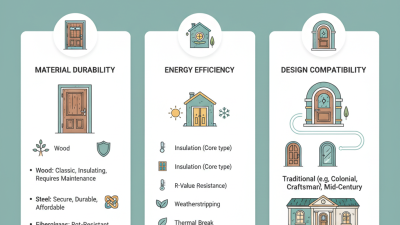
Material affects durability, insulation, and upkeep. Fiberglass resists moisture and can mimic wood grain; steel offers strength but may dent or transfer heat; solid wood brings natural character, yet needs protection from weather. Glass panels brighten a foyer, but their size and orientation influence heat gain. The National Fenestration Rating Council uses U-factor to describe heat transfer; lower values indicate better insulation. Its ratings can help compare tested products, especially glazed doors. The U.S. Department of Energy’s Air Sealing Your Home guidance estimates that air sealing can reduce household energy bills by 10%–20%. That figure applies to air sealing overall, not to replacing a door alone. Installation still counts. I would not treat a rating as a complete verdict: a poorly fitted frame can leave drafts around an otherwise well-insulated slab.
China’s Exterior Entry Door Manufacturing Landscape
China’s exterior entry door manufacturing landscape is broad, serving residential projects, renovations, and commercial construction. Manufacturers may work with steel, aluminum, fiberglass, or wood-faced designs. Their equipment, customization options, and quality controls can vary considerably. Some focus on standard sizes, while others produce doors for unusual openings or specific finishes. A polished sample is useful, but it cannot show how every production batch performs.
A dependable assessment looks beyond appearance. Ask how frames are checked for squareness, how hinges are reinforced, and how thresholds resist water and drafts. Request clear specifications for core material, finish, hardware, and installation tolerances. Where possible, review test records and inspect a finished unit under ordinary daylight. Details matter. Even capable factories can have uneven results when drawings, materials, or inspection steps change between orders. That variation deserves honest attention.
Tips: Compare the same door configuration across suppliers, not just headline prices. Confirm measurements, packaging, lead times, and what inspection evidence is available. Keep written drawings and finish samples for reference. If a response feels vague, ask for a specific production detail.
Criteria for Selecting Exterior Entry Door Manufacturers
When comparing exterior entry door manufacturers in China, look beyond catalog images and headline prices. Start with the door’s intended climate and installation conditions. A coastal home, for example, may need corrosion-resistant hardware and a finish suited to strong sun and salt air. Ask for exact material specifications, core construction, frame details, and available sizes. Small details matter.
Request test reports for the actual door configuration, not just a similar product. Check documented air leakage, water penetration, and thermal performance where relevant to your project. Confirm which testing methods and standards were used, and whether the report comes from an independent laboratory. Ask how factory inspections are recorded, how dimensional tolerances are controlled, and how glass, seals, and hinges are checked before packing. Ask for proof. Photos of packaging and a sample inspection checklist can reveal more than a polished brochure.
Communication is another practical test. Send a drawing with a nonstandard opening and see whether the manufacturer flags clearance, threshold, or hardware issues before production. Clarify lead times, replacement-part availability, warranty exclusions, and who handles damage claims. Compare samples under natural light; finishes can look different on a screen. One imperfect point: no checklist removes every risk. A sample may not reflect a full production run, so agree on inspection steps and acceptance criteria in writing before placing an order.
Profiles of 10 Exterior Entry Door Manufacturers in China
Profiles of ten exterior entry door manufacturers in China reveal a diverse production landscape.
These are capability-based profiles, not a verified ranking. A coastal aluminum-door maker may focus on slim frames and powder-coated finishes. A steel-door producer often emphasizes reinforced panels and multi-point locking. A solid-wood workshop can offer detailed grain matching, though seasonal movement needs careful control. A composite-door factory may combine molded skins with insulated cores.
Details matter.
Another profile is the thermal-break aluminum specialist, whose sample corners can show how frame sections meet. A custom-size producer handles tall or unusually wide openings, but lead times may vary. An export-oriented factory may use reinforced packaging and clear installation guides. One smart-entry supplier prepares doors for electronic locks; buyers should confirm wiring and cutout dimensions. A regional OEM producer can adapt specifications for wholesalers. The tenth profile is a mixed-material maker, pairing metal frames with wood-look surfaces for easier upkeep.
Compare more than showroom photos. Ask for section drawings, hardware schedules, finish samples, and written performance data. Check how measurements are confirmed before production, and who handles adjustments after delivery. A neat sample is useful, but it cannot prove consistent output. I would also ask for recent project references; not every supplier can provide them promptly. That gap deserves attention.
Comparing Manufacturers by Products, Certifications, and Export Capabilities
Comparing China’s exterior entry door manufacturers is less about a polished catalog than about matching construction to the project. Ask whether each supplier builds steel, aluminum, fiberglass, or solid-wood doors, and request section drawings. A door may look substantial online, yet its core, frame depth, threshold, and weather seals determine performance at the opening. Details matter.
Certifications should be checked by scope, not logo count. Confirm the tested product model and the laboratory that issued the report. Check whether results cover air leakage, water penetration, wind load, fire rating, or thermal performance. Requirements vary by destination and building type, so a certificate for one configuration may not apply to another. Keep the paperwork.
Export capability shows up in practical habits: clear lead times, protective corner guards, moisture-resistant packing, consistent labeling, and prompt answers about custom sizes. Ask for recent shipment references and a sample packing list, then compare warranty terms and spare-part support. A factory can be capable and still miss a detail. Treat unverified claims as open questions, not proof of poor quality. The comparison is rarely perfect.