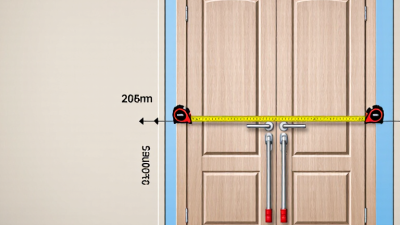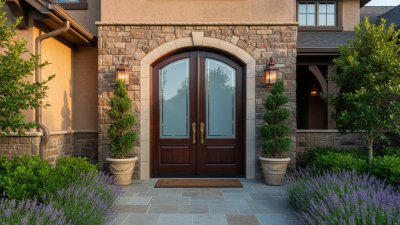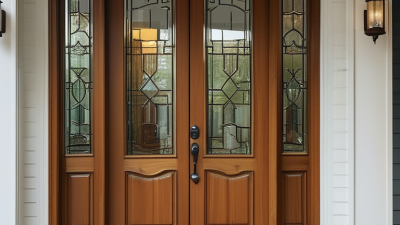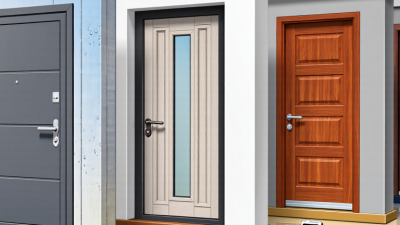
Global buyers are examining China’s double doors manufacturers more carefully than ever. Demand is shaped by commercial construction, residential renovation, logistics facilities, and hospitality projects. Grand View Research reported that the global doors market was valued at approximately USD 140 billion in 2023, with continued growth expected through 2030. This expansion creates opportunity, but it also increases supplier risk.
A dependable manufacturer must offer more than attractive catalog images. Buyers should review frame materials, hinge strength, sealing systems, glass options, surface treatments, and tested performance. For fire-rated or exterior applications, documented compliance matters. Relevant references may include ISO quality systems, ASTM testing methods, EN standards, and local building codes. The exact requirement depends on the destination country and project type. Small details matter. A door leaf that looks aligned in a showroom may bind after installation.
China has a deep manufacturing base, supported by established metalworking, glass-processing, coating, and hardware supply chains. However, factory capability can differ sharply between companies. Some manufacturers provide engineering drawings, sample approval, packaging tests, and installation guidance. Others mainly compete on price. That difference becomes visible when containers arrive with scratched panels or incomplete hardware. It is not always easy.
This guide reviews China’s leading double doors manufacturers for international buyers. It focuses on production experience, customization, quality control, export support, and evidence of project reliability. Buyers should still verify certifications, inspect samples, confirm tolerances, and request recent references. Market reports provide direction, not proof. Careful due diligence remains essential.
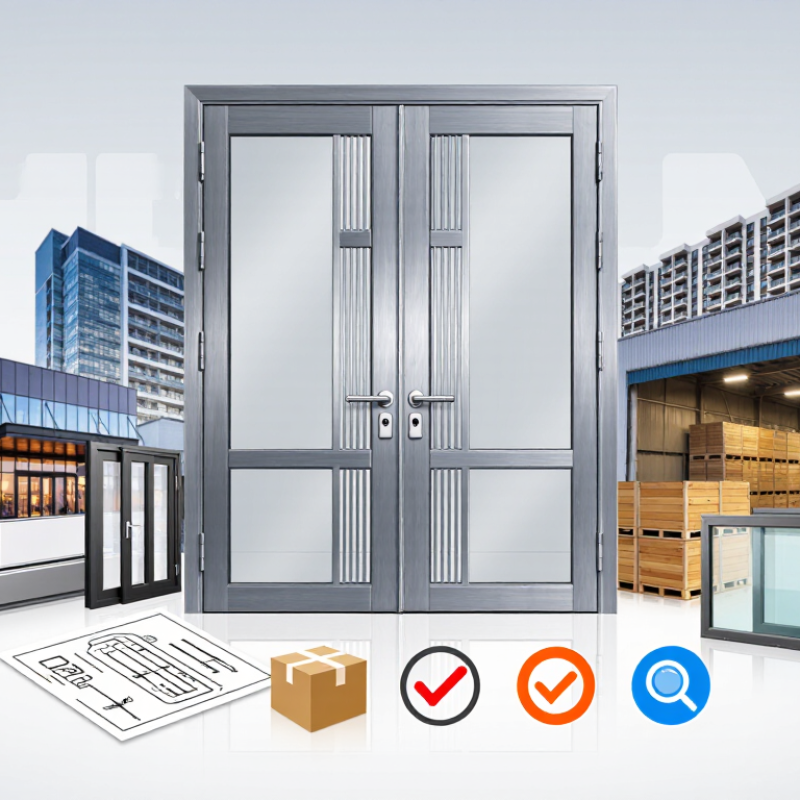
China Top Double Doors Manufacturers for Global Buyers
China’s double-door industry is closely linked to two customs codes. HS 730830 generally covers iron or steel doors, windows, and their frames. HS 761010 commonly covers aluminum structures, including doors, windows, and frames. These classifications help buyers read China export data more accurately.
Export databases can reveal shipment value, volume, destination, and monthly movement. Steel-door shipments often suit warehouses, factories, and fire-rated building projects. Aluminum doors are widely used in offices, villas, hotels, and coastal developments. However, one code may include several product types. Do not treat every shipment as a complete double-door set.
Experienced buyers should compare customs records with factory documents. Ask for material grades, frame thickness, hardware details, packing photos, and test reports. Check whether the quoted product matches HS 730830 or HS 761010. Product classification can vary by structure and national customs practice. Professional review matters here.
Data alone cannot prove manufacturing quality. A large export volume may reflect trading activity, not production strength. That is easy to miss. Samples, factory audits, and pre-shipment inspections provide stronger evidence. Some suppliers also publish unclear specifications, which deserves careful questioning. Buyers should review standards, installation conditions, lead times, and destination-country requirements before placing an order.
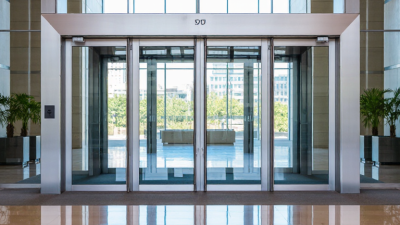
For global buyers, double doors should match the building’s use, climate, and security requirements. Steel doors provide strong impact resistance and stable performance in busy entrances. They suit warehouses, schools, offices, and service areas. Aluminum doors are lighter and resist corrosion, especially in humid or coastal environments. However, thin profiles may feel less solid under heavy daily use.
Wood double doors bring warmth to hotels, villas, and heritage-style projects. They need careful sealing against moisture, sunlight, and seasonal movement.
Glass doors create bright entrances and clear sightlines. Laminated or tempered glass improves safety, but the frame, hinges, and seals still require close inspection.
A beautiful panel cannot correct poor installation. Small gaps can create noise, drafts, and water problems.
Fire-rated systems require more than a thick door leaf. Buyers should check tested fire resistance, compatible frames, certified hardware, smoke seals, and installation instructions. Ratings must match local project requirements and approved testing standards.
During factory evaluation, request material samples, dimensional tolerances, test reports, and production photos. Check welds, powder coating, hinges, and closing force.
No material is perfect. Steel may corrode, wood may move, and glass may show fingerprints quickly. A dependable manufacturer explains these limits clearly and offers practical specifications instead of promising everything. Bulk orders also deserve pre-shipment inspection, packaging checks, and written quality records.
For global buyers comparing China’s top double-door manufacturers, performance evidence matters more than polished catalog figures. The IEA’s 2023 Global Status Report states that buildings consume about 30% of global final energy, making thermal performance commercially important. A lower U-value means less heat transfer, but the result depends on the complete door assembly, glazing, frame, seals, and installation. ISO 10077-1 supports thermal transmittance calculations, while laboratory testing should verify the declared value. A low U-value can still mislead.
Sound control requires a measured Rw rating, not a marketing claim. ISO 10140 covers laboratory sound testing, and ISO 717-1 defines the rating method. For many offices, corridors, and apartment entrances, Rw values around 35–45 dB may be practical, although project noise levels decide the real target. Flanking transmission can reduce performance. Test the whole assembly. That detail is often missed.
Air permeability should be checked against EN 12207. Class 4 permits approximately 3 m³/(h·m²) at 100 Pa, while lower classes allow more leakage. This difference becomes noticeable around a windy entrance. Fire resistance uses EN 13501-2 classifications. An EI30 door provides integrity and insulation for 30 minutes under the relevant test conditions. EI ratings are not interchangeable with fire-door labels from another jurisdiction. Buyers should request accredited laboratory reports, test dimensions, hardware details, and installation conditions. Results can change when the frame, threshold, or closer changes.
Benchmark index based on commonly used European door-performance classifications. Higher values indicate stronger performance. U-values are inverted because lower thermal transmittance is better.
China Top Double Doors Manufacturers for Global Buyers
When evaluating Chinese double door manufacturers, begin with documented quality systems, not attractive catalogs. ISO 9001 shows that production processes are controlled and regularly reviewed. Ask for the certificate scope, issuing body, expiry date, and factory address. The details matter. A certificate alone is not proof.
For European projects, check CE conformity under EN 14351-1, where applicable to the door’s intended use. Request the Declaration of Performance and test evidence for air permeability, water tightness, wind load, and thermal performance. For American projects, identify the exact ASTM standards required. “ASTM tested” is too vague. Confirm the laboratory, test date, specimen size, hardware, and actual configuration of the double doors. A small change in glass, hinges, or gasket can affect results. The process is not perfectly linear, and some documents may need careful translation.
Tips: Inspect one production sample before placing a large order. Look closely at the meeting stile, lock alignment, corner joints, drainage holes, and powder coating thickness. Ask for batch records and corrective-action reports. Factory video calls can help, but they cannot replace an independent audit. Also compare the tested configuration with your quotation. I have seen specifications become unclear at this stage. That weakness deserves attention. Reliable manufacturers explain limitations openly, provide traceable records, and connect certificates with the exact doors being supplied.
| Evaluation Dimension | Relevant Standard or Requirement | What It Verifies | Documents or Evidence to Request | Recommended Buyer Verification | Suggested Weight |
|---|---|---|---|---|---|
| Quality management system | ISO 9001:2015 | A documented quality-management system covering processes such as design, purchasing, production, inspection, corrective action, and customer feedback. | Valid certificate, certification scope, certificate number, issuing certification body, audit validity, and manufacturing-site address. | Confirm the certificate directly through the certification body or an internationally recognized certificate database. Ensure the scope includes doors, windows, or relevant manufacturing activities. | 20% |
| Product conformity for the European market | CE / CPR | For applicable construction products, CE marking indicates that the product has been assessed against the declared performance requirements under the applicable European framework. It is not, by itself, a general product-quality award. | Declaration of Performance (DoP), CE marking information, notified-body details where applicable, factory production-control evidence, and product identification. | Check that the DoP matches the exact door type, intended use, product family, manufacturer site, declared performance, and applicable assessment route. Do not accept a generic CE logo alone. | 20% |
| European external-door performance | EN 14351-1 | Performance characteristics for windows and external pedestrian doorsets, including applicable properties such as air permeability, watertightness, wind load resistance, thermal transmittance, and acoustic performance. | Test reports, classification reports, DoP, product drawings, hardware configuration, glazing specification, and factory-production-control records. | Verify that the tested configuration is technically comparable to the proposed double door: frame material, dimensions, glass, seals, hardware, opening direction, and threshold design. | 20% |
| North American test compatibility | ASTM | Performance against the specific ASTM test methods required by the project, such as air leakage, water penetration, structural performance, thermal properties, or material durability. | Complete laboratory reports showing the ASTM method and edition, specimen size, test configuration, pressure levels, results, laboratory identity, and report date. | Identify the exact ASTM standards in the project specification first. Confirm that the report covers the proposed size and construction rather than relying on a broad “ASTM compliant” statement. | 15% |
| Material and component traceability | Project specification and documented internal controls | Ability to trace profiles, steel or aluminum components, glass, seals, locks, hinges, finishes, and other critical materials to approved suppliers and production batches. | Material certificates, supplier declarations, batch records, incoming-inspection reports, coating or finish specifications, and component lists. | Compare approved samples with mass-production materials. Check whether substitutions require written approval and whether batch records are retained. | 10% |
| Production and inspection controls | Manufacturer’s quality-control plan | Consistency of cutting, welding or joining, assembly, glazing, sealing, hardware installation, surface finishing, dimensional control, and final inspection. | Process flow chart, inspection checklist, calibration records, nonconformance records, corrective-action reports, and final inspection forms. | Request a live or recorded factory audit. Review inspection points, measuring equipment, production capacity, rework procedures, and controls for oversized double-door assemblies. | 10% |
| Performance of the complete double-door assembly | Project-specific performance schedule | Whether the complete doorset meets the required dimensions, operation, weather resistance, security, thermal, acoustic, and durability targets in its final configuration. | Approved shop drawings, calculations where required, sample inspection records, test reports, installation instructions, and maintenance requirements. | Evaluate the complete assembly rather than individual components. Pay particular attention to meeting-stile alignment, threshold drainage, locking points, hinges, seals, and frame anchorage. | 10% |
| Commercial and delivery reliability | Purchase contract and quality agreement | Clarity of specifications, lead time, packaging, export documents, warranty coverage, spare parts, claims handling, and responsibilities for replacement or rework. | Quotation with technical schedule, production timeline, packaging specification, warranty terms, inspection plan, payment milestones, and approved sample record. | Use a written technical annex. Make acceptance dependent on agreed drawings, samples, inspection results, and documented corrective actions. | 5% |
Important: ISO 9001 certification, CE marking, EN 14351-1 evidence, and ASTM test reports address different aspects of compliance. Acceptance should always be based on the destination country, project specification, exact door configuration, and independently verifiable documentation.
China’s top double-door manufacturers should explain purchasing terms before discussing finishes or catalog photos. MOQ may mean sets, cartons, or containers. Confirm the exact unit, packaging method, and mixed-model policy in writing. Customized glass, hardware, and colors usually increase the MOQ.
Lead times should separate production from shipping. A practical quotation lists drawing approval, material preparation, assembly, inspection, and dispatch dates. UNCTAD reports that maritime transport carries over 80% of global merchandise trade by volume. Port congestion can still disrupt a careful schedule. Build buffer days.
Incoterms must match your control level. Under ICC Incoterms 2020, FOB applies to sea transport and transfers risk after onboard loading. FCA may suit container shipments more clearly. Request pre-shipment inspection using measurable checks, including dimensions, surface defects, locks, hinges, and packaging strength. ISO 2859-1 provides recognized sampling procedures and AQL concepts. Photos help, but they are not proof. I have seen attractive samples hide weak corner protection. An independent inspection is safer.
Warranty terms should define coverage, exclusions, response time, and replacement responsibilities. Twelve to twenty-four months is commonly negotiated for manufacturing defects, but climate exposure may require special conditions. Specify whether freight, labor, and spare parts are included. One overlooked detail matters: the warranty should begin at delivery, not factory dispatch. Mistakes happen. Clear records reduce arguments.