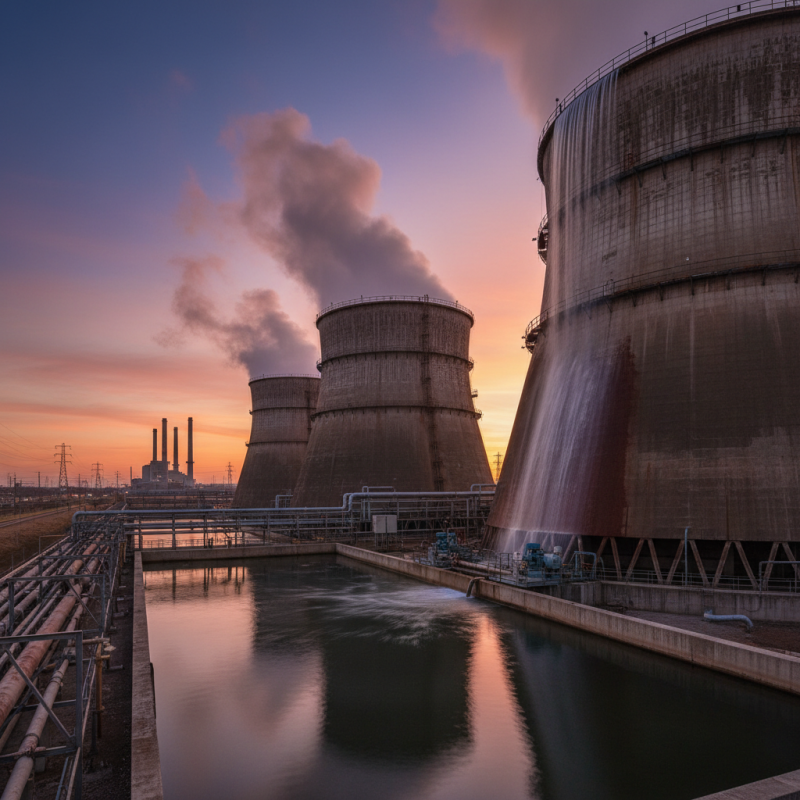
Why Are Cooling Towers Essential for Industrial Processes?
cooling towers play a vital role in industrial processes. These structures help regulate temperatures in various operations. They absorb excess heat from equipment, ensuring systems operate efficiently.
In many factories, cooling towers are the backbone of temperature control. They circulate water to remove heat. This process is crucial, especially in industries like power generation and chemical manufacturing. Without cooling towers, equipment may overheat, leading to malfunctions.
However, not all cooling towers are efficient. Some designs waste water and energy. Regular maintenance is essential to prevent this waste. Industries must reflect on their cooling tower effectiveness. Implementing upgrades might improve efficiency and sustainability.
The Role of Cooling Towers in Industrial Heat Management
Cooling towers play a crucial role in managing heat within industrial settings. They help dissipate excess heat generated by machines and processes, ensuring optimal efficiency. Without these systems, many production lines would face overheating issues. This can lead to equipment failure and costly downtimes.
The function of cooling towers is to transfer heat from water to the atmosphere. The process often involves circulating water through evaporative cooling systems. Water absorbs heat, then evaporates into the air, cooling the remaining liquid. This allows industries to maintain stable operating temperatures. However, designing an effective cooling tower requires careful consideration. Factors such as water quality and ambient temperature can impact performance.
Industry professionals must regularly assess cooling tower efficiency. Sometimes, neglected maintenance can lead to scaling or corrosion. These issues decrease cooling effectiveness. A periodic check helps ensure that cooling towers work correctly. Overall, an effective heat management strategy is vital for industrial processes.
Importance of Cooling Towers in Industrial Heat Management
Key Types of Cooling Towers Used in Various Industries
Cooling towers play a crucial role in industrial processes by managing heat. Various types are employed across different sectors. For example, open circuit cooling towers are common in power plants and manufacturing. They use evaporation to cool water efficiently. According to the Cooling Technology Institute, these towers can reduce water temperatures by up to 20°F.
In contrast, closed circuit cooling towers are suitable for industries requiring strict temperature control, such as pharmaceuticals and food processing. These towers minimize contamination risks. A report by Frost & Sullivan states that closed circuit coolers can increase operational efficiency by 30%. This efficiency can lead to significant cost savings in energy and maintenance.
Tips: Regular maintenance of cooling towers is vital. Check for water quality and ensure proper chemical treatment. Monitoring water levels can also prevent overheating. Additionally, consider implementing advanced monitoring systems. This proactive approach mitigates costly breakdowns.
Properly filtering and treating cooling water can extend the lifespan of cooling towers. However, even the best systems can face unexpected failures. Recognizing early signs of wear can save time and resources. Don't underestimate the importance of meticulous monitoring. Consistent evaluation makes a difference.
Impact of Efficient Cooling Systems on Energy Consumption
Efficient cooling systems play a crucial role in industrial processes. They not only maintain optimal temperatures but also significantly impact energy consumption. According to a report by the U.S. Department of Energy, efficient cooling systems can reduce energy use by up to 30%. This reduction can translate into substantial cost savings for industries.
Many facilities still rely on outdated cooling systems. These older systems often operate at lower efficiency, leading to increased energy costs. For instance, a study from the International Energy Agency found that poorly maintained cooling towers can consume 20% more energy than well-managed ones. This inefficiency highlights a need for regular maintenance and upgrades. Investing in new technology can help companies achieve better performance and lower their carbon footprint.
Moreover, the global trend toward sustainability emphasizes the importance of energy-efficient cooling. An effective cooling tower can improve not just energy efficiency but also water usage. According to the American Society of Heating, Refrigerating and Air-Conditioning Engineers, optimizing water use in cooling systems can save up to 15% annually. As industries strive to meet sustainability goals, adopting better cooling technologies becomes essential. While some leaders are already taking action, many remain hesitant, missing out on significant potential benefits.
Environmental Regulations and the Importance of Cooling Towers
Cooling towers play a vital role in industrial processes, particularly in the context of environmental regulations. These structures help dissipate heat from industrial operations, ensuring systems run efficiently and sustainably. According to the U.S. Energy Information Administration, energy consumption in cooling systems accounts for about 15% of total industrial energy use. This significant percentage underscores the need for effective cooling solutions that meet both operational and environmental standards.
Meeting environmental regulations can be challenging. The Clean Water Act and other regulations impose strict limits on discharge temperatures. Cooling towers mitigate thermal pollution, allowing facilities to operate within these legal bounds. Failure to comply can lead to hefty fines and damage to reputations. Many industries rely on cooling systems, often overlooking their potential environmental impacts.
However, achieving compliance is not always straightforward. Some facilities struggle to upgrade outdated cooling systems. A report by the American Society of Mechanical Engineers highlights that up to 30% of cooling systems in use today are inefficient. This inefficiency often leads to increased water and energy consumption. Continuous monitoring and investment in modern technology are essential, yet some companies hesitate due to perceived costs.
Case Studies: Cooling Towers in Major Industrial Applications
Cooling towers are vital in many industrial sectors. They regulate temperatures, ensuring processes run smoothly. Factories, power plants, and refineries utilize them for efficient heat dissipation. For example, in a power plant, a cooling tower may remove excess heat generated during electricity production.
Tips: Regular maintenance of cooling towers is crucial. Check for any leaks or scale buildup. This can enhance efficiency and prolong their lifespan.
Case studies show their significant impact. In chemical manufacturing, cooling towers manage heat from exothermic reactions. Without them, equipment might overheat, leading to costly shutdowns. Similarly, in oil refineries, cooling towers play a key role in maintaining optimal temperatures for distillation processes.
Tips: Keep a log of temperatures and performance metrics. This practice can help identify any unexpected changes and potential issues early. Attention to detail is essential for optimal operations.