2026 Best Titanium Shoulder Button Head Bolts for Global Buyers?
In the realm of fasteners, Titanium Shoulder Button Head Bolts stand out for their exceptional strength and lightweight properties. Experts in the industry, such as Dr. Amelia Hart, a materials engineer with over 15 years of experience, highlight their versatility. She once stated, "Choosing the right component can make or break your project." This sentiment rings especially true for those seeking reliable solutions in demanding applications.
With their resistance to corrosion and fatigue, Titanium Shoulder Button Head Bolts offer benefits that are hard to ignore. They are essential in aerospace, motorsports, and high-performance engineering. However, selecting the best ones can be challenging for global buyers. Various specifications and standards come into play, making it crucial to understand the market landscape.
While many manufacturers boast about their products, not all live up to their promises. Buyers must conduct thorough research and consider factors such as sourcing legitimacy and product certifications. An informed choice ensures that projects maintain integrity and performance, especially when facing rigorous conditions. The selection process may not be perfect, but understanding the essentials is key to making sound decisions in this competitive field.
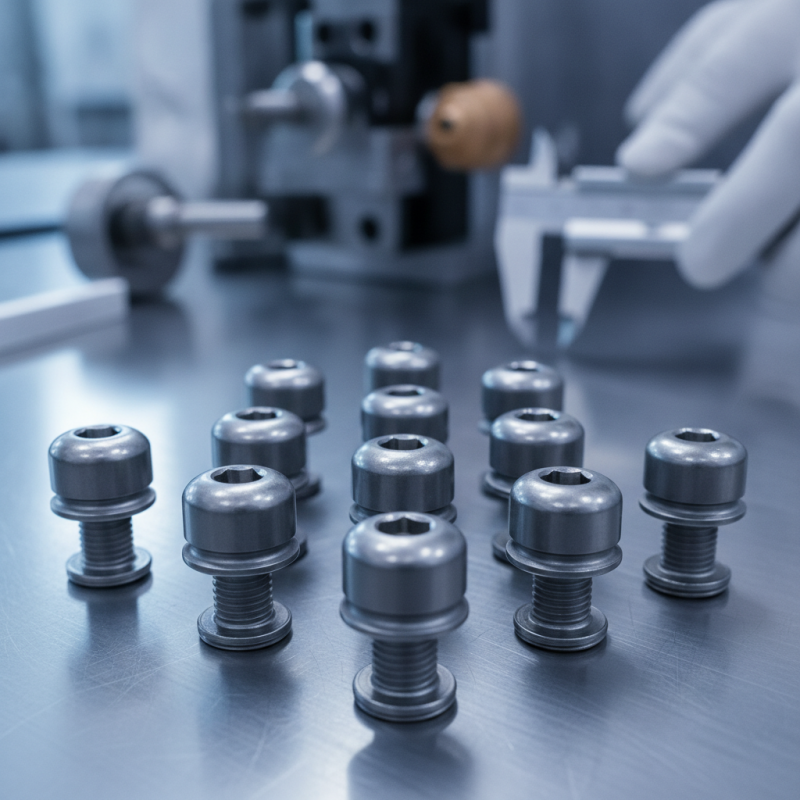
2026 Global Market Overview for Titanium Shoulder Button Head Bolts
The global market for titanium shoulder button head bolts is witnessing significant growth. These fasteners are favored for their strength and lightweight properties. Industries like aerospace and automotive increasingly demand durable and corrosion-resistant materials. Titanium fits the bill perfectly, making it essential for modern engineering applications.
In 2026, the production rates for these bolts are projected to rise. However, manufacturers face challenges, such as high raw material costs and fluctuating demand. Understanding these dynamics is crucial. It helps in forging partnerships and optimizing supply chains. Yet, companies should reflect on the need for sustainable practices. While titanium is a strong material, its mining and processing have environmental impacts.
Market research indicates a growing focus on innovation. Companies are exploring new manufacturing techniques to improve efficiency. There is potential for collaboration in R&D to refine product quality. The evolving landscape requires constant adaptation. This observation invites deeper contemplation on how the industry can balance growth and responsibility.
Key Specifications and Standards for Titanium Shoulder Button Head Bolts
In the world of engineered fasteners, titanium shoulder button head bolts stand out for their unique properties. They excel in strength-to-weight ratios. A recent industry report highlights that titanium bolts are 60% lighter than steel but maintain comparable tensile strength. This makes them ideal for applications in aerospace and automotive sectors, where reducing weight is critical for performance.
Key specifications for titanium shoulder button head bolts include grade classification and dimensional tolerances. Common grades, like Grade 5 and Grade 23, define their corrosion resistance and mechanical properties. Dimensional standards often align with ASTM F468 criteria, ensuring consistency and reliability across manufacturing processes. Users should be aware that not all suppliers adhere strictly to these specifications. Verification of compliance is crucial to avoid potential operational failures.
Testing methods for these bolts also play a vital role in their application. Industry standards like ISO 898-1 outline tensile strength tests that many manufacturers still overlook. This can lead to compromised performance under load. Buyers must investigate the testing protocols employed by suppliers to ensure the bolts meet required performance benchmarks. Purchasing decisions should weigh both specifications and the credibility of manufacturers in adhering to these essential standards.
2026 Best Titanium Shoulder Button Head Bolts - Performance Comparison
Top Manufacturers of Titanium Shoulder Button Head Bolts and Their Market Share
When considering titanium shoulder button head bolts, it's essential to recognize the key manufacturers shaping the market. These companies leverage advanced technology and materials expertise, contributing to an evolving landscape. Their market share reflects innovation and quality, critical for various applications, including aerospace and automotive industries.
Tips: Look for manufacturers with ISO certifications. This ensures they meet international quality standards. Pay attention to customer reviews. Feedback can indicate the reliability of products offered.
Corrosion resistance and strength are critical properties of titanium bolts. Different manufacturers may excel in these areas, but not every product meets the same benchmark. It's wise to research the specific grades of titanium used. Not all are created equal; some may have better performance characteristics than others.
Tips: Always ask for material specifications. Knowledge about the composition can help in making informed choices. Keep an eye on industry trends. What works today might not be suitable tomorrow.
Applications and Benefits of Titanium Shoulder Button Head Bolts in Various Industries
Titanium shoulder button head bolts are gaining popularity across various industries due to their lightweight and high strength. According to a recent report by the International Titanium Association, titanium components can reduce overall vehicle weight by up to 40%. This reduction translates into improved fuel efficiency and lower emissions in automotive manufacturing.
In the aerospace sector, these bolts are crucial due to their corrosion resistance and performance in extreme conditions. The Aerospace Titanium Market is projected to grow significantly, reaching USD 3.58 billion by 2025, as noted in the Global Market Insights report. Industries are increasingly adopting titanium fasteners for critical applications, ensuring safety and reliability.
However, sourcing titanium bolts can pose challenges. Variability in raw material quality impacts performance. Moreover, the cost of titanium remains higher than traditional materials, impacting budgets. Companies must weigh the benefits against the expenses. Despite these considerations, the long-term value often justifies the investment. Careful selection and understanding of the application needs remain essential for optimal performance in harsh environments.
Material Properties and Performance Metrics of Titanium Alloys in Fasteners
Titanium alloys are widely recognized for their exceptional properties, particularly in fasteners such as shoulder button head bolts. These alloys combine low density with high strength, making them ideal for demanding applications. Their corrosion resistance also stands out, which is vital in harsh environments. Each titanium alloy, like Ti-6Al-4V, brings unique performance metrics to the table.
The fatigue resistance of these materials is noteworthy. It allows for reliable performance over extended periods, even under fluctuating loads. However, not all titanium alloys perform equally. Inconsistent quality can arise during manufacturing, leading to issues in real-world applications. Proper testing is essential to ensure that the fasteners will meet specific strength and durability requirements.
Despite their advantages, using titanium alloys may not always be the best choice. The cost can be significantly higher than traditional materials like steel. Additionally, there are challenges in machining and joining these materials, which can complicate production. Buyers need to weigh these factors carefully. Understanding material properties can enhance decision-making in selecting fasteners for various projects.